DRAMATURGY RESOURCE
  • Home
  • Dramaturgy
    • Script Analysis
    • Research for Production
    • Dramaturgy and the Audience
  • Contact

Dramaturgy and the Audience.

When you are developing performances, it is important to keep in mind not only the reasons why you are creating the work, but also who it is being created for. It is critical for the dramaturgy in the piece and for the dramaturgy to continue thinking about the audience throughout the creation process. ​

The Two Key Questions

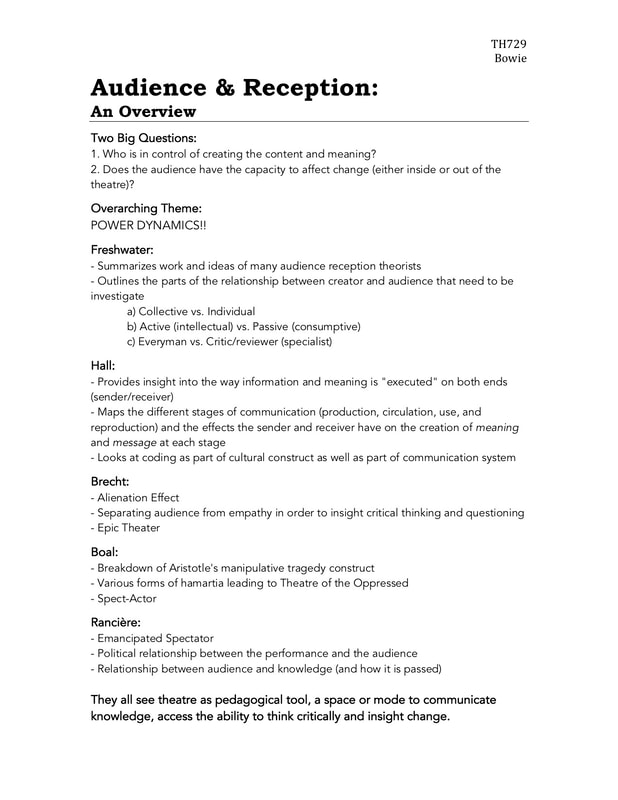
When you are developing a production or performance, there are two key questions that you need to keep in mind:
  1. Who is in control of creating the content and meaning?
  2. Does the audience have the capacity to affect change (either inside or outside of the theatre)? 

The dramaturgy in your piece needs to recognise and respond to the power dynamics and stakes that exist in the answers to these two questions. You will need to decide how much agency you assign to your audience. You also need to assess whether you want those who are not part of your collective (i.e. your creative team, your community, your cultural identity) to feel like the performance resonates with their personal experience - which is called domestication - or if you want them to feel dissociated, uncomfortable - which is called foreignization. There are no right or wrong answers to these questions, but it is critically important for you to address and answer them in your process. The responses may change depending on the performance or the creative team, or on the mission of a company, or the timing of the performance. These questions are at the heart of the relationship between audience and performer/creator, and the dramaturgy of your work will be affected by that relationship. 

Below is an overview of several key theorists discussing the relationship between audience and creator in the realm of theatre. They each have a different take on how those dynamics play out and what our goals should be as artists. But ultimately, they all acknowledge the importance of the audience-performer relationship and see theatre as a space for teaching and learning, a site for critical thinking, and a springboard for change. 
Picture
Powered by Techne Creations Ltd. 
  • Home
  • Dramaturgy
    • Script Analysis
    • Research for Production
    • Dramaturgy and the Audience
  • Contact